Protecting High-Risk Workers From Workplace Violence and Delayed Response
Employees do not need to work in an obviously dangerous job to face serious risk.
A healthcare worker entering someone’s home, a utility employee working in an isolated area or a field worker dealing directly with the public may all face situations where immediate support is unavailable.
When a worker is alone, the consequences of an incident can become more serious because nobody nearby can see what is happening or raise the alarm.
High-risk work is about more than the task
Organizations often assess risk by looking at the job being performed.
That is important, but it is only part of the picture.
The environment matters. So does the person the employee may encounter, the distance from support and how quickly a situation could change.
Workplace violence is a particular concern for employees who deal directly with members of the public.
Aggression can escalate quickly, and the worker may not be able to make an obvious phone call or explain where they are.
A strong safety process needs to account for those moments.
Risk assessment should shape the response
Different situations need different levels of protection.
A routine office task should not necessarily use the same process as a home visit, remote inspection or high-risk field activity.
Organizations should assess the likely hazards, how isolated the worker will be and how long emergency support could take to arrive.
That assessment can then shape check-in intervals, escalation procedures and the safety tools available to the employee.
Give workers more than one way to get help
A worker may not always be able to make a phone call.
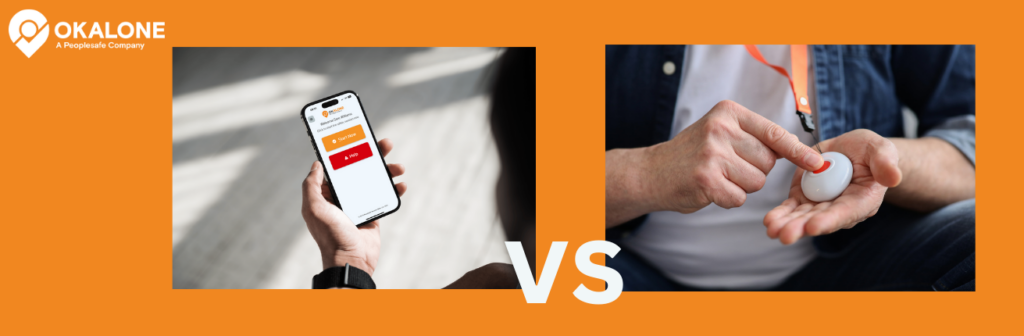
Discreet alerts can help when visibly requesting assistance could increase the risk. Automated check-ins can also identify when a worker has failed to confirm they are safe.
Location information can help responders understand where assistance is needed without relying on the worker to explain it during an emergency.
Technology should support the response process, not replace it.
Someone still needs to receive the alert, understand what it means and act quickly.
Build a culture where people use the process
Employees need to trust the safety system before they will use it consistently.
That requires practical training, clear privacy boundaries and leadership that treats worker safety as part of normal operations.
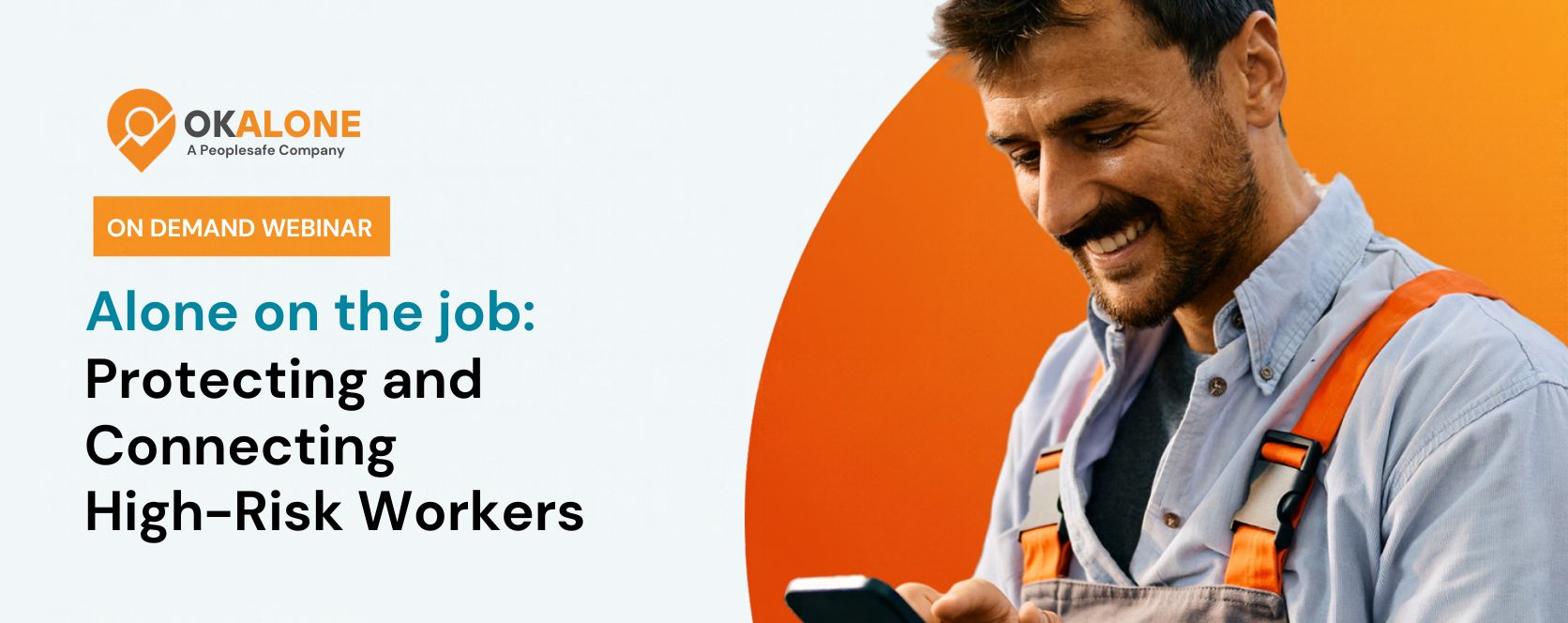
The on-demand webinar Alone on the Job: Protecting and Connecting High-Risk Workers explores workplace violence, risk assessment and the practical steps organizations can take to protect people working alone.

Stacey Manclark
As an expert in lone worker content management, I possess an extensive knowledge base and experience in the area of lone working and safety monitoring. My expertise in this field encompasses a wide range of areas, including risk assessment, training, communication, and technology. I have a deep understanding of the unique risks associated with lone workers and have researched and written many projects and articles to educate people in how to mitigate these risks.
Throughout my time with OK Alone, I have kept up to date with technological developments, legislative changes and regulations that have been introduced to help organizations ensure the safety of their lone workers.
Book a Demo Today
Alternatively, get a free trial of the app
Want to try OK Alone? Click the button below and enter your details. It's free and no credit card is required.
