US Heat Safety Regulations Are Changing

Understanding why these regulations are changing—and what they mean for employers—is becoming increasingly important as organisations adapt their health and safety programmes to manage heat-related risks more effectively.
Key Takeaways
- Heat safety regulations are expanding. States including California, Oregon, Washington, Colorado, Maryland and Nevada have introduced dedicated heat illness prevention requirements, while OSHA is developing a proposed nationwide heat standard.
- Heat illness prevention is becoming more proactive. Modern regulations focus on planning, hydration, training, communication and emergency response rather than simply reacting to incidents.
- Employers should prepare now. Even organisations operating outside states with dedicated regulations can benefit from adopting recognised heat safety best practices.
- Technology is playing a growing role. Location-aware systems can help organisations identify when environmental conditions require additional attention and support existing Heat Illness Prevention Plans.
- New OSHA Heat Zones from OK Alone automatically notify workers and administrators when state heat illness prevention thresholds are reached, helping organisations respond more proactively to changing environmental conditions without changing existing workflows.
Introduction
Across North America, employers are experiencing more frequent periods of high temperatures and extended heat events. These conditions are creating new challenges for organisations with outdoor workers and others exposed to the elements.
In response, a growing number of states have introduced or strengthened heat safety regulations designed to reduce the risk of heat-related illness and injury. [1][2][3]
For many organisations, heat has traditionally been viewed as an operational inconvenience rather than a significant workplace hazard. Today, that perspective is changing. Regulators increasingly recognise that prolonged exposure to high temperatures can have serious consequences, affecting not only a worker's health but also concentration, judgement and overall safety.
The result is a growing body of legislation that goes well beyond simply advising workers to drink more water. Modern heat regulations require employers to assess risk, plan ahead, train employees and establish clear procedures for preventing and responding to heat-related illnesses.
Whether your organisation operates in a state with dedicated heat regulations or not, the direction of travel is becoming increasingly clear.
From Guidance to Legislation
California became the first state to introduce a dedicated outdoor heat illness prevention standard in 2005, establishing requirements that have since influenced many other jurisdictions. The legislation was created to protect workers exposed to high outdoor temperatures across industries including agriculture, construction, landscaping, transportation and oil and gas. [4][5]
Several years later, the tragic death of 17-year-old farm worker Maria Isabel Vasquez Jimenez highlighted the devastating consequences of inadequate heat protection. After working for hours in extreme heat without adequate access to water or shade, she collapsed and later died. The incident prompted further strengthening of California's regulations, with Section 3395 now formally known as the Maria Isabel Vasquez Jimenez Heat Illness Standard. [4]
California demonstrated that heat illness was not simply an unavoidable consequence of working outdoors. It was a workplace hazard that could be managed through planning, training and practical controls.
Since then, other states including Oregon, Washington, Colorado, Maryland and Nevada have introduced or expanded their own heat safety requirements, reflecting a wider recognition that employers need structured approaches to managing heat exposure. While the specific requirements differ, they all share a common goal: preventing heat-related illness before it occurs. [1][2][6][7][8]

Heat Regulations Are About Managing Risk
Although each state's legislation differs, they all focus on the same principle.
The objective isn't to eliminate outdoor work during hot weather. It's to reduce the risks associated with it.
Heat illness exists on a spectrum. Early symptoms such as dehydration, dizziness, muscle cramps and fatigue can quickly progress into heat exhaustion or heat stroke if not recognised and treated. Just as importantly, heat affects mental performance. Workers experiencing heat stress may become less alert, make poorer decisions and react more slowly, increasing the likelihood of falls, vehicle incidents and equipment-related accidents. [2][9]
This broader understanding explains why modern regulations focus on preventing heat illness before it develops rather than simply responding once someone becomes unwell.
Importantly, these risks are not confined to traditionally hot industries such as construction or agriculture. Utility workers, inspectors, maintenance engineers, telecommunications crews, public works teams, oil and gas employees, field service engineers and many other lone or remote workers may all spend prolonged periods outdoors where heat exposure becomes a significant operational risk.
The Common Themes Emerging Across States
While temperatures, thresholds and terminology differ, today's heat regulations share several common principles.
Hydration
Access to drinking water is one of the most consistent requirements.
California requires employers to provide fresh, suitably cool drinking water located as close as practicable to where employees are working. Oregon, Washington, Colorado, Maryland and Nevada similarly require employers to ensure workers have appropriate access to drinking water whenever heat risks are present, with several states recommending approximately one quart (32 ounces or 946 ml) per worker, per hour during periods of elevated heat. [1][2][4][6][7][8]
The emphasis is no longer simply on making water available. Employers are expected to ensure it remains cool, accessible and available throughout the working day while actively encouraging workers to stay hydrated.
Shade and Recovery
Providing somewhere for workers to cool down has become another central requirement.
Several states now require employers to provide shaded or cooled recovery areas that are large enough to accommodate workers during rest breaks. Where shade cannot reasonably be provided, alternative cooling measures may be necessary. [1][2][4][6][7]
The intention is simple: allow workers to lower their body temperature before heat stress develops into something more serious.
Rest Breaks Based on Risk
Many of the newer regulations move beyond fixed break schedules.
Instead, rest periods increase as temperatures rise or when additional risk factors are present.
Washington and Oregon, for example, require mandatory cool-down breaks once temperatures reach specified thresholds, with more frequent breaks required as conditions become more extreme. Colorado also introduces additional protections during high-risk conditions, including temperatures above 95°F, poor air quality, long shifts and the use of heavy personal protective equipment. Maryland similarly requires employers to implement preventative measures as temperatures increase through defined heat index trigger points. [1][2][6][7]
Rather than treating every hot day the same, employers are expected to adjust controls according to the level of risk.

Acclimatization
One of the biggest developments in recent legislation is the recognition that not every worker responds to heat in the same way.
New employees, workers returning after time away and individuals exposed to sudden increases in temperature are significantly more vulnerable to heat-related illness.
Both Oregon and Washington require employers to consider acclimatization, gradually allowing workers to adapt to hotter conditions over several days while providing additional supervision during that period. Maryland has adopted similar expectations within its Heat Illness Prevention Standard. [1][2][7][9]
This reflects an increasingly preventative approach to worker safety rather than waiting for symptoms to appear.
Training
Heat safety is no longer viewed as common sense.
Employers are increasingly expected to provide formal training covering:
- the signs and symptoms of heat illness
- personal and environmental risk factors
- hydration practices
- emergency response procedures
- reporting processes
- preventative measures
- recognising when conditions require additional controls.
Importantly, several regulations also require training to be delivered in a language employees fully understand. [1][2][6][7]
Communication and Emergency Response
Perhaps the biggest shift in modern regulations is the emphasis placed on communication.
Many outdoor workers spend significant periods working alone or across large sites. If someone develops heat stroke, rapid intervention can make the difference between a full recovery and a medical emergency.
California requires employers to maintain effective communication methods during high heat and establish procedures for contacting emergency services quickly. Oregon, Washington, Colorado and Maryland include similar expectations, requiring employers to monitor workers, maintain reliable communication systems and ensure emergency responders can quickly locate an affected employee. [1][2][4][6][7]
This reflects a broader understanding that prevention doesn't end with hydration and shade. Employers also need practical procedures for recognising when someone is becoming unwell and responding quickly.
Different States, Different Approaches
Although the overall direction is towards stronger worker protections, legislation is not developing uniformly across the United States.
California, Oregon, Washington, Colorado, Maryland and Nevada have all introduced dedicated heat illness prevention standards or regulations requiring employers to implement structured controls when temperatures reach defined thresholds. While each state has taken a slightly different approach, the common themes of planning, hydration, training, communication and emergency preparedness are remarkably consistent. [1][2][4][6][7][8]
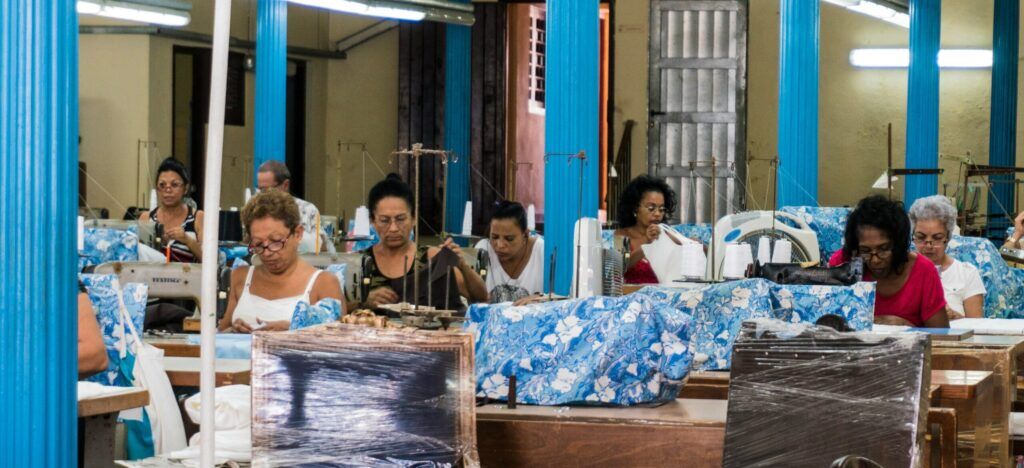
Minnesota provides an interesting contrast. Rather than focusing on outdoor work, it has long maintained occupational heat standards that apply primarily to indoor workplaces, recognising that heat-related illness can affect employees working in manufacturing, warehouses and other enclosed environments as well. [10]
Texas has taken a different approach. In 2023, House Bill 2127 established statewide pre-emption over many areas of local regulation, including labour matters. As a result, local ordinances in cities such as Austin and Dallas requiring regular water breaks for construction workers could no longer be enforced because they exceeded state labour requirements. Supporters argued the legislation created greater consistency for businesses, while critics expressed concern about the loss of established worker protections during periods of extreme heat. [11][12]
Despite these differences, the broader direction remains clear. Across much of North America, employers are facing increasing expectations to actively assess, monitor and manage heat-related risks rather than relying solely on general workplace safety duties.
Preparing for the Future
Heat regulations are unlikely to remain static.
As more states review workplace safety requirements and more organisations experience prolonged periods of high temperatures and extended heat events, employers should expect continued development in this area. The trend over the past two decades has been towards more structured heat illness prevention requirements, with increasing emphasis on planning, training and proactive risk management rather than simply reacting when someone becomes unwell.
That trend is also reflected at the federal level. In 2024, the Occupational Safety and Health Administration (OSHA) published its proposed Heat Injury and Illness Prevention Rule, which would establish the first nationwide heat-specific workplace standard in the United States. Although the rule has not yet been finalised, it proposes many of the same principles already adopted by states such as California, Oregon and Washington, including written Heat Illness Prevention Plans, access to drinking water, rest breaks, acclimatization, employee training and emergency response procedures. [3]
If implemented, the rule would create a national baseline for employers while allowing states operating their own OSHA-approved plans to continue enforcing standards that provide equal or greater levels of protection. Even for organisations operating outside states with dedicated heat legislation today, the proposal provides a strong indication of where occupational safety expectations are heading.
Fortunately, many of the measures now appearing in legislation represent good health and safety practice regardless of legal requirements.
Organisations can strengthen their approach by:
- reviewing heat-related risks as part of routine risk assessments
- ensuring easy access to water and cooling areas
- adjusting work schedules where practical
- training workers and supervisors to recognise early symptoms
- establishing clear emergency response procedures
- monitoring workers during periods of elevated heat, particularly those working alone or in remote locations
- documenting the measures taken during periods of increased heat risk.
Employers that build these practices into their everyday operations will be well positioned as legislation continues to evolve.
Technology Is Supporting a More Proactive Approach
Technology is also beginning to play a larger role in supporting heat illness prevention. Rather than relying solely on weather forecasts or supervisors manually monitoring changing conditions, organisations can now use location-aware systems that automatically identify when workers enter areas where environmental conditions require additional precautions.
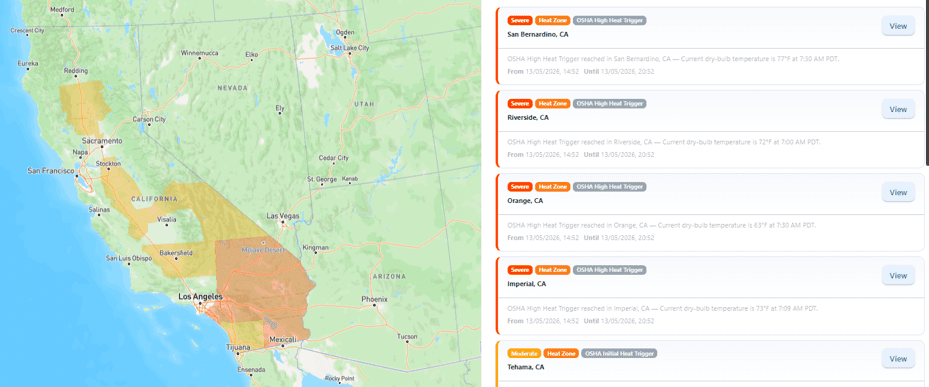
OK Alone's new OSHA Heat Zones feature has been developed to support organisations operating in states with dedicated heat regulations. Using the existing OSHA Alert Zone Intelligence platform, the system checks county-level weather conditions every 15 minutes and automatically identifies when workers enter areas where the temperature thresholds set out within participating state heat illness prevention regulations. Instead of generating generic hot weather notifications, Heat Zones use the actual trigger points defined within each supported state's regulations, ensuring alerts are aligned with the legislative requirements applicable to that location.
When a threshold is reached, both the worker and their administrator are automatically notified. Workers receive a simple notification advising them they have entered either a Heat Proximity Zone or a Heat Limit Zone, while administrators can immediately see the affected areas within the same Alert Zone Intelligence map they already use for other environmental risks. Because the feature is integrated into existing workflows, organisations gain additional environmental awareness without introducing new dashboards or operational processes. Supported launch states include California, Oregon, Washington, Maryland, Nevada and Colorado, with additional jurisdictions expected to follow as heat legislation continues to develop.
Importantly, Heat Zones are not designed to replace an employer's Heat Illness Prevention Plan. Instead, the feature provides timely awareness when state heat illness prevention thresholds have been reached, rather than operational guidance. Once notified, organisations can implement the controls already defined within their own Heat Illness Prevention Plan. Depending on the work being undertaken, this might include increasing hydration, introducing additional recovery breaks, modifying work schedules, rotating workers, increasing supervisor communication or implementing other preventative measures appropriate to the level of risk. By combining environmental awareness with worker location, check-ins and emergency alerting, employers can move from reacting to changing conditions to proactively managing heat-related risks.
Final Thoughts
Heat safety is no longer simply a seasonal consideration. It is becoming an increasingly important part of workplace risk management.
The regulations emerging across North America demonstrate a common philosophy: protecting workers requires more than reacting to emergencies. It requires planning, communication, training and practical procedures that help prevent incidents from occurring in the first place.
While legislation continues to evolve from state to state, the direction is becoming increasingly clear. Employers are expected to understand how heat affects their workforce, assess when environmental conditions create additional risk and implement appropriate controls before workers become ill.
Organisations that take this proactive approach today will not only be better prepared for future regulatory developments, but will also create safer working environments for employees exposed to heat as part of their everyday roles.
Frequently Asked Questions
Under OSHA's General Duty Clause, employers must protect workers from recognized hazards that can cause death or serious physical harm, including hazardous heat exposure. Employers should assess heat risks and implement appropriate safeguards. Additional requirements may apply under state-specific heat safety regulations.
California, Oregon, Washington, Maryland, Nevada, and Colorado have introduced heat-related workplace protections, although coverage and requirements differ by state and industry. Minnesota also has requirements addressing heat in indoor workplaces. Employers should consult the regulations applicable to their locations and operations.
OSHA published a proposed federal Heat Injury and Illness Prevention rule in August 2024 covering outdoor and indoor work settings. The proposal includes heat hazard assessments, written prevention plans, hydration, rest breaks, acclimatization, training, and emergency response measures. Employers should check OSHA's official rulemaking updates for its current status and continue following applicable existing requirements.
An effective Heat Illness Prevention Plan should identify heat-related hazards and establish appropriate measures for hydration, access to shade or cooling areas, rest breaks, acclimatization, worker training, communication, and emergency response. Employers should also explain how conditions will be monitored and how additional precautions will be introduced as heat risks increase.
Heat-related hazards can affect both indoor and outdoor workers. Some jurisdictions have specific indoor heat requirements, while others focus on outdoor occupations or particular industries. Warehouses, manufacturing facilities, commercial kitchens, and other workplaces without adequate cooling may present significant heat exposure risks. Employers should assess their working conditions and applicable regulations.
OK Alone's OSHA Heat Zones feature uses location-aware weather monitoring to identify when supported state heat thresholds are reached. Workers and administrators receive notifications through the existing Alert Zone Intelligence platform, helping teams recognize changing conditions and apply their established safety procedures. The feature supports heat risk awareness but does not replace an employer's Heat Illness Prevention Plan or legal responsibilities.
References
[1] Oregon OSHA. Heat Illness Prevention Rules (437-002-0156 and 437-004-1131).
https://osha.oregon.gov/pages/topics/heat-stress.aspx
[2] Washington State Department of Labor & Industries. Outdoor Heat Exposure Rules.
https://www.lni.wa.gov/safety-health/safety-training-materials/workshops-events/beheatsmart
[3] Occupational Safety and Health Administration (OSHA). Heat Injury and Illness Prevention.
https://www.osha.gov/heat
[4] California Code of Regulations, Title 8, Section 3395. Heat Illness Prevention in Outdoor Places of Employment (Maria Isabel Vasquez Jimenez Heat Illness Standard). California Department of Industrial Relations.
https://www.dir.ca.gov/title8/3395.html
[5] California Department of Industrial Relations, Division of Occupational Safety and Health (Cal/OSHA). Heat Illness Prevention Guidance and Resources.
https://www.dir.ca.gov/dosh/heatillnessinfo.html
[6] Colorado Department of Labor and Employment. Agricultural Labor Conditions Rules (7 CCR 1103-15).
https://cdle.colorado.gov
[7] Maryland Occupational Safety and Health (MOSH). Heat Stress Standard. Maryland Department of Labor.
https://labor.maryland.gov/labor/mosh/moshheatstress.shtm
[8] Nevada Occupational Safety and Health Administration (Nevada OSHA). Heat Illness Prevention Guidance and Workplace Heat Resources.
https://www.business.nv.gov/news-media/press-releases/2025/industrial-relations/nevada-osha-heat-regulation-enforcement-begins-april-29-2025/
[9] National Institute for Occupational Safety and Health (NIOSH). Criteria for a Recommended Standard: Occupational Exposure to Heat and Hot Environments.
https://www.cdc.gov/niosh/topics/heatstress/
[10] Minnesota Department of Labor and Industry. Indoor Ventilation and Temperature Requirements.
https://www.dli.mn.gov/sites/default/files/pdf/STD_5-1.3_indoor_ventilation_and_temperature.pdf
[11] Texas Legislature. House Bill 2127 (88th Regular Session) – Texas Regulatory Consistency Act.
https://capitol.texas.gov/BillLookup/BillSummary.aspx?LegSess=88R&Bill=HB2127
[12] National Weather Service. Heat Safety.
https://www.weather.gov/safety/heat


Stacey Manclark
As an expert in lone worker content management, I possess an extensive knowledge base and experience in the area of lone working and safety monitoring. My expertise in this field encompasses a wide range of areas, including risk assessment, training, communication, and technology. I have a deep understanding of the unique risks associated with lone workers and have researched and written many projects and articles to educate people in how to mitigate these risks.
Throughout my time with OK Alone, I have kept up to date with technological developments, legislative changes and regulations that have been introduced to help organizations ensure the safety of their lone workers.
Book a Demo Today
Alternatively, get a free trial of the app
Want to try OK Alone? Click the button below and enter your details. It's free and no credit card is required.
