Remote Worker Safety in Off-Grid Locations: Best Practices
Key Takeaways
Off-grid worker safety depends on preparation and reliable communication. It also needs a response plan that turns missed contact into prompt, coordinated action.
- Assess hazards before departure and avoid high-risk lone work. Share routes and return times. Verify vehicle, safety equipment, training, and backup contacts.
- Test charged satellite-capable communication devices before leaving cellular networks. Use Low Signal Mode+ to maintain check-ins through SMS or calls.
- Monitor signal strength, battery level, and last contact time to distinguish technical disruptions from emergencies and guide proportionate response.
- Set risk-based check-in intervals and assign named responders; document escalation procedures from automated alerts to emergency-service notification.
- Route SOS alerts directly to response. Escalate man-down alerts when a worker does not answer the prompt. Run drills and incident reviews to strengthen your safety program.
Why Off-Grid Worker Safety Matters
Off-grid worker safety matters because remote and isolated workers in off-grid locations face serious risks. Organizations must understand how exposed these environments can be. Many field workers and utility crews work beyond mobile coverage in rural areas, where help is far away and a missed call can go unnoticed. Communication blind spots can lead to delayed emergency response.
Organizations therefore need a dependable remote worker safety checklist. They also need a safety program that includes remote worker safety monitoring tools such as Low Signal Mode+ and satellite integration. OK Alone shows how this approach works.
Before the Trip: Complete Your Remote Worker Safety Checklist
Start With a Risk Assessment
Every remote worker safety checklist starts well before a crew reaches the job site. Risk assessments should come first. Supervisors and workers need to identify occupational hazards and environmental hazards together. They should consider the likelihood of an incident, the risk of a disabling injury, and whether help is close by. These factors determine how often lone workers need to check in. Where the risk is high, avoid lone work or have another person present.
Confirm Your Pre-Departure Checklist
A written safety program should confirm the following before departure:
- A primary contact and backup contact, along with a daily work plan that covers the destination and route, estimated arrival, and return time
- Communication devices that work outside cellular range, such as satellite phones or messengers, which workers test and charge before leaving
- Vehicle readiness and emergency supplies, such as food and water, for an unexpected overnight stay
- An escalation plan prepared in advance so a missed check-in prompts action instead of confusion
Check Connectivity Before the Crew Leaves Coverage
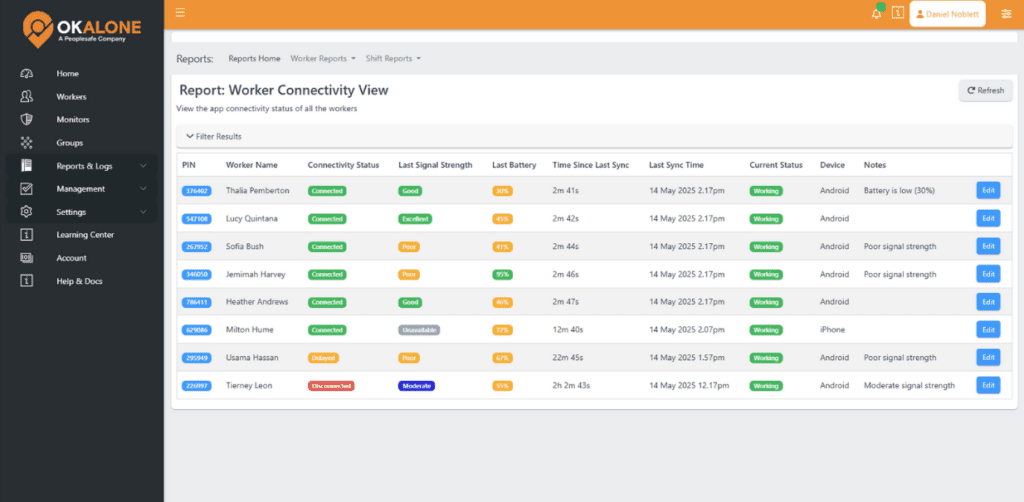
OK Alone supports remote worker safety monitoring at this stage with Worker Connectivity View. Supervisors can check each worker's signal strength, battery level, and recent connections before the crew leaves coverage. Satellite device integration also lets teams verify that their satellite connectivity works before departure, not after an emergency.
During the Shift: Remote Worker Safety Monitoring Beyond
Mobile Coverage
Low Signal Mode+ Keeps Check-Ins Going
Once a crew arrives at the work site, mobile signal often drops. That is where a safety program proves its value. OK Alone's Low Signal Mode+ activates automatically as soon as a device loses Wi-Fi or mobile data. It prompts the worker to check in through SMS or a phone call instead of a data-based app. Check-in schedules stay in place in areas with poor mobile phone reception, such as valleys and dense forest stands. This works as long as a mobile connection is available for SMS or calls.
Worker Connectivity View Gives Supervisors Context
Remote worker safety monitoring takes more than a check-in. Supervisors need context. Worker Connectivity View gives managers real-time monitoring of each worker's signal strength, battery level, and last connection time. Signal strength is currently available on Android devices. Managers can interpret a missed check-in accurately rather than guess at its cause. Weak signal combined with a dying battery may indicate a technical gap, not a crisis. That difference determines how quickly a response team acts.
Satellite Integration for Crews Beyond Cellular Range
Satellite communication fills the remaining gap for crews beyond cellular range. OK Alone integrates with ZOLEO and SPOT among other satellite devices. A paired satellite device keeps location sharing, messaging, and alerts available even if terrestrial networks fail. Supervisors stay in contact with workers on remote terrain and deep backcountry routes where a phone alone cannot help.
When Help Is Needed: Follow a Clear Remote Worker Safety
Response Plan
In off-grid worker safety, a response plan works only when every step is documented before an alert fires.
Build a Clear Escalation Ladder
A clear escalation ladder can follow four stages. First, an automated prompt asks the worker to confirm their status through welfare checks. If there is no response, the next step is a direct contact attempt by phone or radio. The supervisor then receives a notification and reviews the worker's last known location. Emergency responders become involved if the worker remains unreachable.
SOS, Man-Down and Fall Detection Alerts
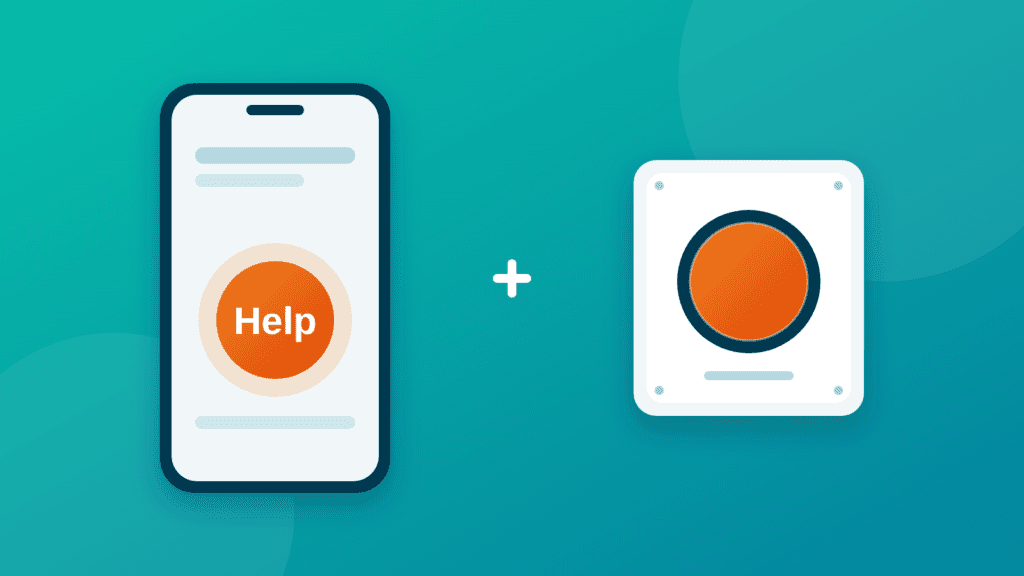
An SOS alert, sent when a worker presses the SOS button, bypasses the ladder and goes directly to a response. A man-down alert starts when a worker has not moved for a set period. It escalates if the worker does not respond to the prompt. A fall detection alert escalates automatically. Together, these emergency alerts give response teams a clear trigger to act.
Safety Monitoring in the Field
Keep a written log of every contact attempt, and name the person responsible for each decision. OK Alone makes this structure practical in the field. Worker Connectivity View shows supervisors signal strength and the last contact time. They can then determine whether silence points to a dead zone or a genuine emergency. Low Signal Mode+ and satellite integration keep the escalation chain working where mobile networks cannot reach.
Conclusion: Off-Grid Worker Safety Starts With Preparation
Off-grid operations always involve risk, but the right preparation can manage it. A strong remote worker safety checklist gives supervisors the visibility they need before a crisis develops. Low Signal Mode+, Worker Connectivity View and satellite integration support that checklist. A clear escalation plan also means teams can respond to silence quickly instead of making assumptions. OK Alone helps organizations strengthen off-grid worker safety, no matter how far workers travel beyond cellular range.
FAQs
Can workers stay safe while working in off-grid locations?
Yes, with careful preparation: assess the risks, share a travel plan, arrange regular check-ins, and carry reliable communication devices. Avoid lone work when the risks are too high.
How can off-grid workers stay connected without mobile coverage?
Satellite phones and other satellite technology provide communication beyond cellular range. Compatible satellite devices can integrate with OK Alone to support location sharing, messages, and safety alerts.
What backup communication options help when mobile data fails?
If cellular service still supports calls or texts, workers can check in that way. OK Alone's Low Signal Mode+ prompts these alternatives when data is lost; beyond cellular coverage, a satellite device is needed.
What should workers check before heading to an off-grid site?
Test and charge communication devices, confirm backup contacts, and share the route and expected return time. Check vehicle readiness and emergency supplies for an unexpected overnight stay.
What should happen if an off-grid worker misses a check-in?
Follow a written escalation plan: prompt the worker, attempt direct contact, notify the supervisor, and review the last known location. Involve emergency services if the worker remains unreachable. SOS alerts need an immediate response, and man-down alerts escalate if the worker does not answer the prompt.


Stacey Manclark
As an expert in lone worker content management, I possess an extensive knowledge base and experience in the area of lone working and safety monitoring. My expertise in this field encompasses a wide range of areas, including risk assessment, training, communication, and technology. I have a deep understanding of the unique risks associated with lone workers and have researched and written many projects and articles to educate people in how to mitigate these risks.
Throughout my time with OK Alone, I have kept up to date with technological developments, legislative changes and regulations that have been introduced to help organizations ensure the safety of their lone workers.
Book a Demo Today
Alternatively, get a free trial of the app
Want to try OK Alone? Click the button below and enter your details. It's free and no credit card is required.
