Using Geofencing Apps for Field Worker Safety in 2026
Using geofencing apps for field worker safety has become an increasingly popular approach for organisations managing mobile teams. By creating virtual boundaries around specific locations, these systems help employers understand when workers arrive at or leave a site, providing valuable operational visibility across multiple locations.
Key Takeaways
- Geofencing creates virtual location boundaries and can alert organizations when workers enter or leave defined areas.
- It can support site visibility, attendance confirmation, location-based workflows, and awareness of specific risk zones.
- Geofencing alone does not confirm that a worker is safe or detect every emergency.
- Worker safety improves when location awareness is combined with structured check-ins and automated escalation.
- Location monitoring should be proportionate, transparent, and linked to a clear safety or operational purpose.
- Smartphone-based monitoring can make geofencing and worker-safety processes easier to scale across distributed teams.
- The strongest approach combines location awareness with active worker-wellbeing monitoring rather than relying on movement data alone.
From an operational point of view, this is useful. It helps confirm attendance, monitor movement between jobs and provide a clearer picture of how work is being carried out across different locations.
This is why many organisations look for a geofencing app for field workers when reviewing how they manage their mobile workforce.
However, while geofencing answers questions about location, it does not answer a more important one — whether the worker is safe.
To address that, location awareness needs to be supported by structured safety monitoring.
What Is Geofencing?
Geofencing uses location data to define virtual zones. When a worker enters or exits one of these areas, the system generates an alert.
In practice, this is often used to confirm that someone has arrived at a job, entered a restricted area or spent the expected amount of time at a location. It provides a level of visibility that can be helpful for both planning and reporting.
What it does not do is confirm that a worker is safe. A worker can be inside a geofenced area and still be experiencing a problem that goes completely unnoticed.
The Safety Limitation of Geofencing
This is where the limitation becomes clear.
If a worker enters a site and something happens while they are there, geofencing alone will not necessarily detect it. Even if a system flags that someone has not left a location, that information still needs to be interpreted and acted on.
The challenge is not simply knowing where someone is. It is knowing when something has happened that requires a response. That is why geofencing works best when it forms part of a wider monitoring approach, rather than being relied on as a safety measure in isolation.
When Geofencing Is Useful
Geofencing does have a clear role in many organisations.
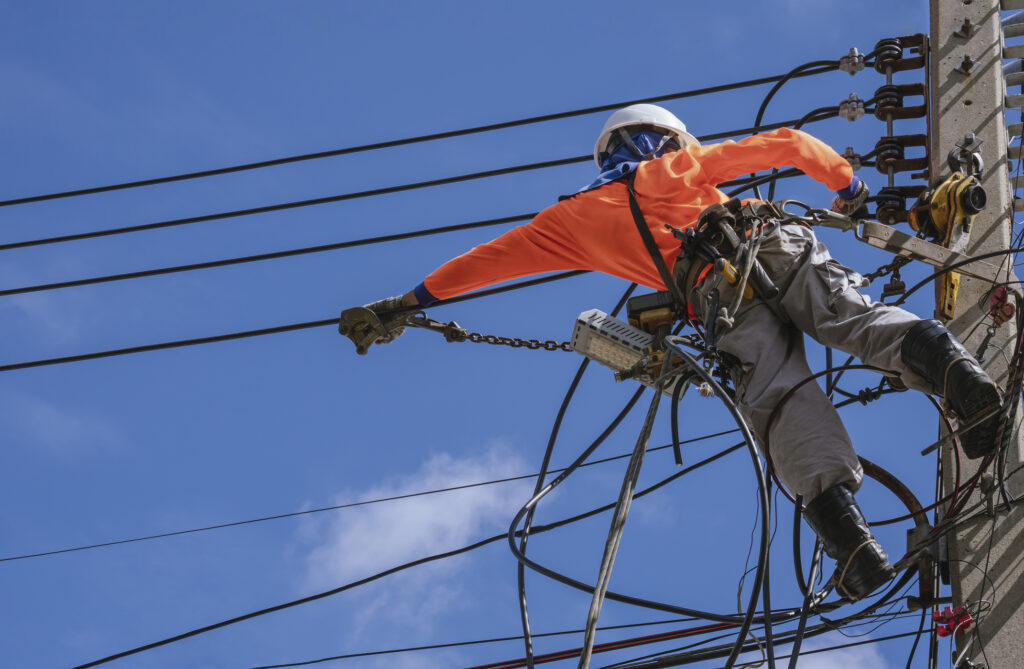
It is particularly useful where workers move between multiple locations during the day, where entry into certain areas needs to be monitored, or where there is a requirement to confirm that tasks are being carried out in the correct place.
In these situations, it adds valuable context and improves overall visibility.
But it should be seen as supporting information, not as a substitute for safety monitoring.
Turning Location Awareness into Worker Protection
To turn location awareness into meaningful protection, it needs to be combined with a system that actively checks on worker wellbeing.
Structured monitoring provides that layer.
With OK Alone, workers confirm their safety at intervals throughout the day. If a check-in is missed, escalation begins automatically. This means that a lack of response becomes the trigger, rather than relying on movement alone.
When combined with location awareness, this creates a much clearer picture. Organisations know where someone is working, but more importantly, they know whether that person has confirmed they are safe.
Scalability for Mobile Teams
As with many safety systems, scalability becomes more important as organisations grow.
Mobile teams often change in size, with contractors joining for specific projects or demand increasing in certain areas. Systems that rely on additional hardware can become difficult to manage in these situations.
OK Alone avoids this by operating through smartphones. New users can be added quickly, allowing organisations to extend monitoring without introducing extra processes or equipment.
This makes it much easier to maintain consistent protection across teams, even as organisations grow or their workforce changes over time.
Compliance and Proportionality
Geofencing also needs to be used carefully.
Collecting location data without a clear purpose can raise concerns, particularly if it feels excessive or intrusive. Any monitoring approach should be proportionate to the level of risk and clearly communicated to those using it.
By focusing on safety confirmation rather than constant observation, structured monitoring helps strike that balance. Location data is used where it adds value, but it is not relied on as the sole method of oversight.
Conclusion
Geofencing provides useful location insight, but it does not in itself ensure worker safety.
To create a more complete approach, it needs to be combined with structured monitoring that can detect when something may be wrong.
OK Alone brings these elements together in a single smartphone-based platform, combining location awareness, structured check-ins and automated escalation to provide practical protection for lone workers without adding unnecessary complexity.
Frequently Asked Questions
A geofencing app creates virtual geographic boundaries and triggers alerts when users enter or exit defined zones.
Not by itself. It should be combined with structured monitoring and escalation.
OK Alone uses smartphone location capability and structured check-ins to support monitoring.
Only where location-based risk justifies it.
No. It tracks location but does not confirm wellbeing.
It must be implemented proportionately and transparently.
Missed check-ins trigger escalation automatically.
No. It operates via smartphones.
Yes. Digital onboarding supports distributed deployment.
Begin with the Lone Worker Risk Assessment Guide to assess proportionate controls.



Stacey Manclark
As an expert in lone worker content management, I possess an extensive knowledge base and experience in the area of lone working and safety monitoring. My expertise in this field encompasses a wide range of areas, including risk assessment, training, communication, and technology. I have a deep understanding of the unique risks associated with lone workers and have researched and written many projects and articles to educate people in how to mitigate these risks.
Throughout my time with OK Alone, I have kept up to date with technological developments, legislative changes and regulations that have been introduced to help organizations ensure the safety of their lone workers.
Book a Demo Today
Alternatively, get a free trial of the app
Want to try OK Alone? Click the button below and enter your details. It's free and no credit card is required.
