Driving Heat Stress Strategy in EHS: Leadership Approaches for Emerging Risks and Indoor Challenges
Heat stress has quietly become one of the fastest-moving areas of EHS regulation in the US, and for good reason.
In its own proposed national heat standard, OSHA cites 1,042 US worker deaths from occupational heat exposure between 1992 and 2022, an average of 34 a year, with 43 recorded in 2022 alone. The also report 33,890 heat-related injuries and illnesses involving days away from work between 2011 and 2020, or roughly 3,390 a year. OSHA is explicit that both figures are likely undercounts: the agency points to an examination of California workers' compensation claims that found 3 to 6 times more annual heat-related illness and injury cases than the official BLS survey captured ([OSHA, Federal Register 89 FR 70698]). For lone workers on rooftops, jobsites, or rural utility routes, that risk is compounded by the simple fact that no one is standing next to them to notice the early signs.
A patchwork of state rules
At present, Federal rulemaking hasn't caught up to the risk. OSHA's proposed heat standard was published August 30, 2024, drew more than 43,000 public comments before the comment period closed, and remains unfinalized after an extended post-hearing comment process. In the meantime, six states have moved ahead with their own enforceable rules, each with its own temperature triggers set directly in state regulation:
California requires shade at 80°F and mandatory cool-down rest at 95°F (Cal/OSHA, Title 8 CCR §3395);
Oregon applies basic protections at an 80°F heat index and high-heat procedures at 90°F (Oregon OSHA);
Washington sets basic protections at 80°F (52°F for workers in nonbreathable PPE) with escalating rest breaks at 90°F and 100°F (Washington State Legislature, WAC 296-62-09530 and 296-62-09547);
Maryland mirrors an 80°F/90°F/100°F structure (Maryland MOSH); and
Colorado applies an 80°F/95°F structure to agricultural employers as of January 1, 2026 (Colorado Department of Labor and Employment, 7 CCR 1103-15).
Nevada takes a different approach entirely - rather than a fixed temperature trigger, employers with more than 10 employees must complete a job hazard analysis for roles with sustained heat exposure, though the state treats 90°F as a "heat priority day" for inspection purposes (Nevada Division of Industrial Relations). For EHS leaders running multi-state operations, that means the compliance bar isn't one line - it's six different lines, each with its own thresholds, triggers, and paperwork.

Turning a moving target into a documented process
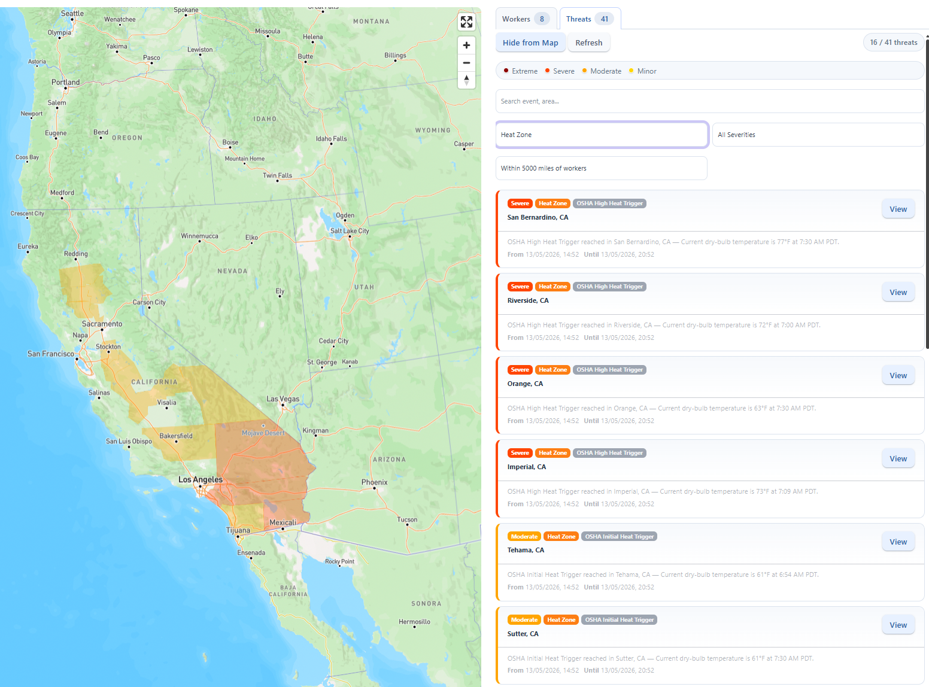
This is exactly the kind of emerging risk that benefits from being built into the safety systems workers already use, rather than living in a separate binder. That's the thinking behind OK Alone's OSHA Heat Zones, part of the platform's broader Alert Zone Intelligence layer.
Here's how it works: heat zones are checked automatically at the county level every 15 minutes against the actual legal thresholds in California, Oregon, Washington, Maryland, Nevada, and Colorado. When a covered worker's location crosses into an active zone, they get a push notification naming the tier - Heat Proximity at the state's basic threshold, or Heat Limit once conditions hit the high-heat trigger - so they know a state-mandated response point has been reached, not just that it's a hot day.
Monitors see the same zones on the Alert Zone Intelligence map they already use for weather and incident alerts, with no new dashboard to learn. Workers outside those six states aren't left uncovered either - they continue to receive standard National Weather Service extreme-heat alerts through the same system.
The indoor heat gap
It's worth being precise about what this does and doesn't do. OSHA Heat Zones is a notification layer, tied to the specific legal thresholds in those six states — it flags when a threshold has been reached so the response plan can kick in; it doesn't currently distinguish indoor from outdoor exposure or replace a state-specific prevention plan, PPE program, or supervisor judgment.
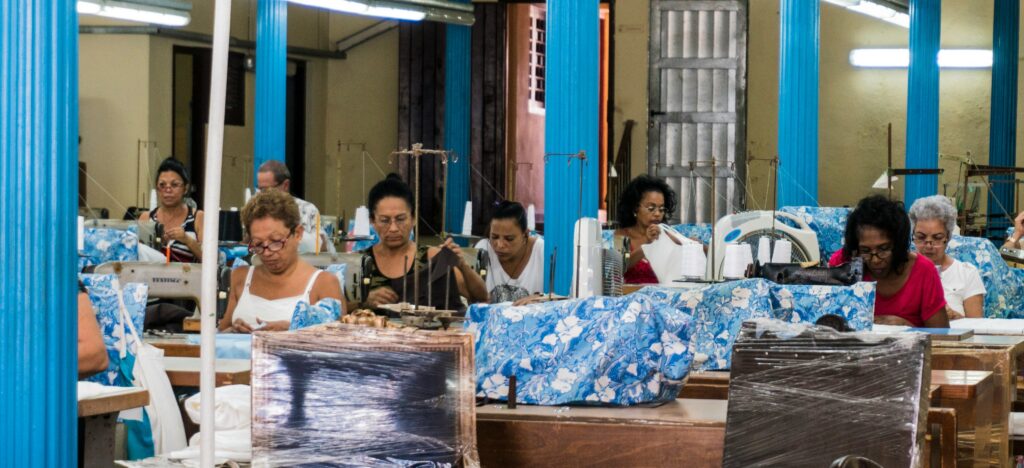
That's a meaningful distinction for the "indoor challenges" side of heat strategy in particular. Warehouses, manufacturing floors, and commercial kitchens carry their own heat-illness risk profile, and still need a dedicated indoor heat management plan and a way for employees to request help if needed. Minnesota shows why that gap matters: it's the mirror image of the six states above, with an enforceable indoor heat standard but, by its own admission, no outdoor one (MNOSHA). Outdoor and indoor heat risk are being regulated on two separate tracks, state by state - but a safety solution needs to cover both kinds of exposure, or it will leave a blind spot in the workplaces where the risk runs the other way.
What this means for leadership
The organizations getting ahead of heat stress aren't waiting for a federal standard to force their hand. They're treating documented, timestamped, system-driven alerts as a way to show their prevention plan is actually operating in real time , not just written down. This gives frontline workers earlier awareness of exactly when conditions cross a legal line. For a lone or remote workforce, pairing that early awareness with existing check-in and Man Down protections closes a gap that a written policy alone can't: someone still has to notice when a worker in the heat has gone quiet.
Sources:
- Heat Injury and Illness Prevention in Outdoor and Indoor Work Settings, Notice of Proposed Rulemaking — OSHA, Federal Register 89 FR 70698
- Heat Illness Prevention, Shade and Other Cooling Measures — Cal/OSHA, California Department of Industrial Relations
- Oregon OSHA's Permanent Rules for Heat Illness Prevention — Oregon OSHA
- WAC 296-62-09530 and 296-62-09547, Outdoor Heat Exposure — Washington State Legislature
- Heat Stress Standard: Key Requirements — Maryland Occupational Safety and Health (MOSH)
- 7 CCR 1103-15, Agricultural Labor Conditions Rules — Colorado Department of Labor and Employment
- Guidance for Regulation R131-24AP: Heat Illness Prevention — Nevada Division of Industrial Relations
- STD 1-4.2A, Heat Stress Outdoors — Minnesota Department of Labor and Industry (MNOSHA)
- STD 5-1.3, Indoor Ventilation and Temperature — Minnesota Department of Labor and Industry (MNOSHA)

Stacey Manclark
As an expert in lone worker content management, I possess an extensive knowledge base and experience in the area of lone working and safety monitoring. My expertise in this field encompasses a wide range of areas, including risk assessment, training, communication, and technology. I have a deep understanding of the unique risks associated with lone workers and have researched and written many projects and articles to educate people in how to mitigate these risks.
Throughout my time with OK Alone, I have kept up to date with technological developments, legislative changes and regulations that have been introduced to help organizations ensure the safety of their lone workers.
Book a Demo Today
Alternatively, get a free trial of the app
Want to try OK Alone? Click the button below and enter your details. It's free and no credit card is required.
