Lone Worker Legislation & Policy for Tasmania
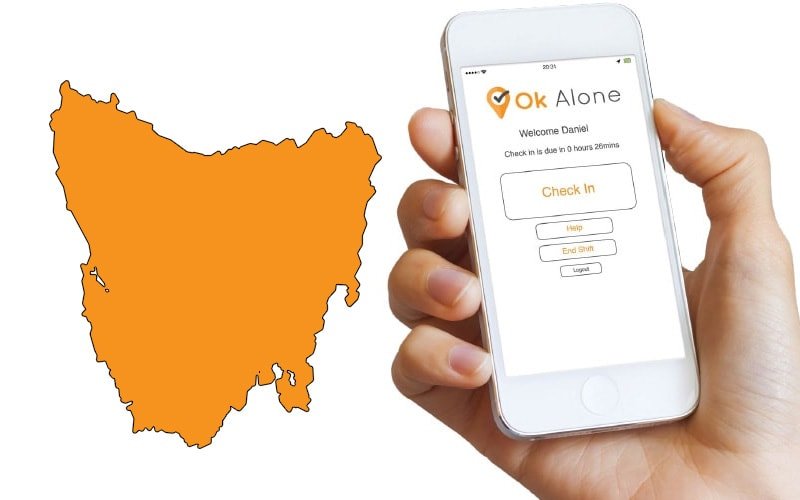
Here are the acts and regulations found in Tasmania, related to lone working and work alone employees. We cover all the lone worker policy and legislation we have found for this area, specifically for the state of Tasmania.
Key Takeaways
- Tasmania employers should consider the requirements applying to remote or isolated workers.
- An effective lone worker policy starts with identifying who works alone and the risks associated with their tasks.
- Clear roles, training, communication methods, and emergency escalation make the policy usable day to day.
- Employers should review procedures when working arrangements, technology, or hazards change.
Work Health and Safety Act 2012 Tasmania
Division
3 - Further duties of persons conducting businesses or undertakings
20. Duty of persons conducting businesses or undertakings involving management
or control of workplaces
2) The person with management or control of a workplace must ensure, so far as is reasonably practicable, that the workplace, the means of entering and exiting the workplace and anything arising from the workplace are without risks to the health and safety of any person.
Division Six –Remote or isolated work
48. Remote or isolated work
(1) A person conducting a business or undertaking must manage risks to the health and safety of a worker associated with remote or isolated work, in accordance with Part 3.1 .
(2) In minimising risks to the health and safety of a worker associated with remote or isolated work, a person conducting a business or undertaking must provide a system of work that includes effective communication with the worker.
(3) In this regulation –
assistance includes rescue, medical assistance and the attendance of emergency service workers;
remote or isolated work, in relation to a worker, means work that is isolated from the assistance of other persons because of location, time or the nature of the work.
| Work-alone consideration | What employers should confirm |
|---|---|
| Applicable legislation | The current state or provincial law and scope of remote or isolated work |
| Hazard assessment | Which lone worker tasks require assessment and appropriate controls |
| Communication | Requirements for contact, check-in methods, and worker access to help |
| Response procedure | What must happen if scheduled communication fails or an emergency occurs |
| Training and records | Relevant staff instruction, documentation, and review expectations |





Stacey Manclark
As an expert in lone worker content management, I possess an extensive knowledge base and experience in the area of lone working and safety monitoring. My expertise in this field encompasses a wide range of areas, including risk assessment, training, communication, and technology. I have a deep understanding of the unique risks associated with lone workers and have researched and written many projects and articles to educate people in how to mitigate these risks.
Throughout my time with OK Alone, I have kept up to date with technological developments, legislative changes and regulations that have been introduced to help organizations ensure the safety of their lone workers.
Book a Demo Today
Alternatively, get a free trial of the app
Want to try OK Alone? Click the button below and enter your details. It's free and no credit card is required.
