Best Safety Systems for Lone Workers in 2026: Key Risk Assessment Features
Selecting the best safety systems for lone workers in 2026 requires more than evaluating individual features or devices. The key question is whether a system matches the specific risks identified in your organization. Health and safety guidance emphasizes implementing proportionate controls based on credible risk rather than simply purchasing technology.
A thorough and structured risk assessment forms the foundation of any effective lone worker protection strategy. When risks are clearly understood, it becomes easier to identify systems that provide genuine protection rather than added complexity.
What Makes a Safety System Effective?
The most effective lone worker systems focus on real-world working conditions rather than feature checklists. Key attributes include:
- Alignment with operational risk: Systems are designed to reflect actual exposure, not hypothetical threats.
- Proactive identification: They allow early detection when issues arise.
- Clear escalation workflows: Ensuring timely and reliable response to alarms.
- Scalability: Systems adapt as teams grow or change without adding management complexity.
- Documentation and reporting: Capturing time-stamped check-ins and escalation records to support compliance.
Technology supports safety but is not the determining factor. Protection effectiveness depends on whether the system fits the documented risks.

Key Risk Assessment Features to Consider
1. Scheduled Check-Ins
Isolation is one of the most common lone worker risks. Many incidents occur because no one is aware of a problem until too late. Platforms like OK Alone require workers to confirm safety at intervals. Missed check-ins trigger automatic escalation, shifting focus from reactive alarms to proactive monitoring.
2. Configurable Escalation Processes
Detection alone does not ensure safety. Systems must allow organizations to define who is contacted, how quickly escalation occurs, and when further action is required. This guarantees that responses follow internal procedures and operational realities.
3. Location Awareness That Adds Value
Knowing a worker’s location can improve response but continuous tracking may be intrusive. The most practical systems provide location information only when it matters—typically during an incident—while maintaining privacy during normal operations.
4. Audit-Ready Documentation
Time-stamped check-ins, logs of escalations, and central reporting create a clear trail. This supports internal review and regulatory compliance, often integrated with broader lone worker compliance software solutions.
5. Adaptability Across Teams
Workforces are dynamic. Contractors, seasonal staff, or multi-site teams can strain device-based systems. App-based solutions, such as OK Alone, allow new users to join quickly without issuing hardware, enabling scalable worker protection across the organization
Proactive vs. Reactive Detection
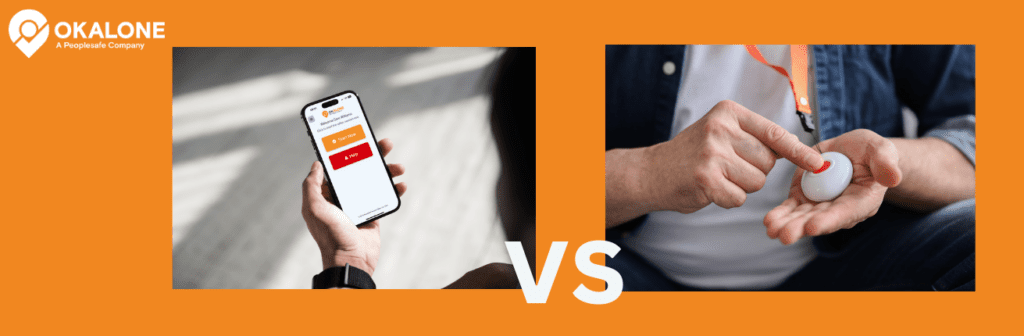
Traditional safety devices, like panic buttons or radios, rely on a worker to trigger an alert. While suitable in certain high-risk scenarios, these systems are reactive. Structured monitoring takes a different approach: a lack of response is treated as a potential issue and escalated automatically. This proactive detection is particularly effective in environments where isolation is the primary concern.

Matching Systems to Real Risk
Not all lone worker roles involve the same hazards:
High-incapacitation risk roles: Devices with fall detection may be appropriate.
Isolation-dominant roles: Healthcare, housing, or property staff often benefit more from structured monitoring systems that escalate missed check-ins.
The most effective systems align their monitoring approach with the actual risk type rather than a generic feature set.
Comparing Lone Worker Safety System Approaches
Use the risks identified in your assessment to decide which approach is most appropriate. Some roles may benefit from combining methods.
| Approach | Suitable When | How It Helps | Key Limitation |
|---|---|---|---|
| Manual SOS device | Workers need a direct way to request help during a recognizable emergency. | Sends an alert when the worker activates the alarm. | The worker must be able to recognize the situation and activate the device. |
| Automatic detection device | Falls or incapacitation are credible risks in the working environment. | Can detect certain events and issue an alert without manual activation. | Detection depends on the device and may not identify every incident. |
| Structured check-in app | Isolation and delayed awareness are significant risks for mobile or distributed teams. | Regular safety confirmations and escalation of missed check-ins support worker oversight. | Check-in intervals and escalation procedures must match the assessed risks. |
| Combined protection | Workers face both immediate hazards and extended periods working alone. | Adds regular check-ins alongside an appropriate emergency alert method. | Employers must configure, train, and test each part of the response process. |
Avoiding Feature Overload
More features do not automatically equate to better protection. Complex systems can be harder to use, manage, and maintain. Clear, simple workflows focused on detection, escalation, and response often deliver better outcomes than overcomplicated solutions.
Conclusion
The best safety systems for lone workers in 2026 are built around documented risk, not technology alone. Platforms like OK Alone combine scheduled check-ins, defined escalation, and scalable deployment to support lone workers effectively and efficiently. The first step for any organization is a structured risk assessment, followed by choosing a system that responds directly to those risks.
Frequently Asked Questions
Alignment with documented risks and proactive monitoring.
It depends on the risk type. Isolation-heavy roles benefit from app-based structured monitoring, while high-risk physical tasks may justify hardware with automatic detection.
Scheduled check-ins, configurable escalation, documentation, and scalable deployment.
Yes. It captures time-stamped confirmations and escalation logs automatically.
Yes. Missed check-ins trigger immediate escalation.
For roles with credible risk of injury or incapacitation.
App-based solutions can be deployed quickly and managed efficiently, making it easier to provide consistent protection across distributed workforces.
No. Dedicated devices are only required when documented hazards or specific risks justify their use.
Yes. Safety systems should be implemented in a proportionate and transparent way to maintain trust and ensure compliance.
Start with the Lone Worker Risk Assessment Guide and choose safety controls that are appropriate for the actual risks faced by employees.



Stacey Manclark
As an expert in lone worker content management, I possess an extensive knowledge base and experience in the area of lone working and safety monitoring. My expertise in this field encompasses a wide range of areas, including risk assessment, training, communication, and technology. I have a deep understanding of the unique risks associated with lone workers and have researched and written many projects and articles to educate people in how to mitigate these risks.
Throughout my time with OK Alone, I have kept up to date with technological developments, legislative changes and regulations that have been introduced to help organizations ensure the safety of their lone workers.
Book a Demo Today
Alternatively, get a free trial of the app
Want to try OK Alone? Click the button below and enter your details. It's free and no credit card is required.
