Best Employee GPS Monitoring Apps for Field Workers in 2026
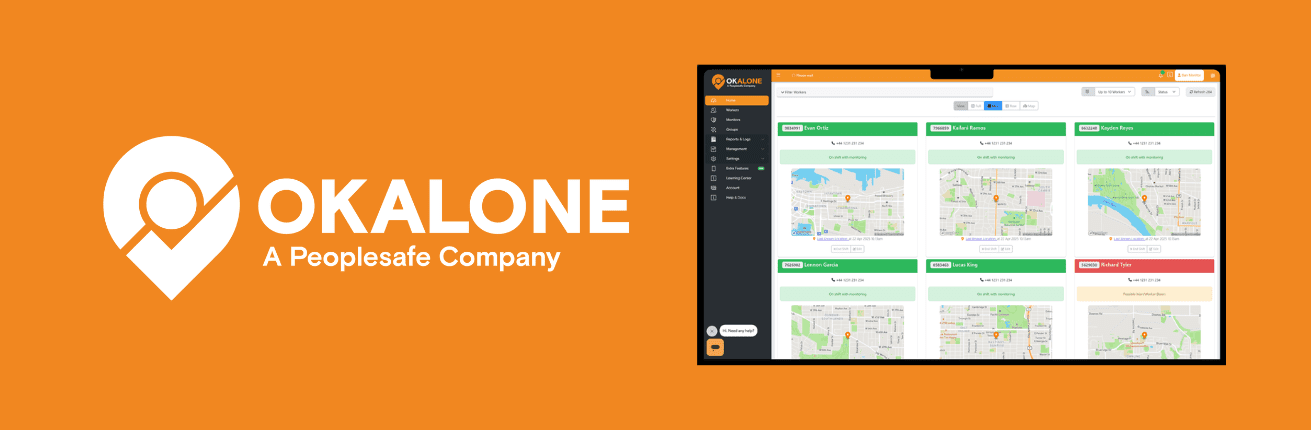
Employee GPS monitoring software has evolved significantly in 2026. What was once a productivity tool is now an important part of workplace safety, particularly for organizations managing distributed or lone workers.
These systems are often referred to as employee GPS tracking apps, although in practice they are used to support safety monitoring rather than continuous surveillance.
Field engineers, housing officers, healthcare professionals and inspectors often work without direct supervision. In these environments, location visibility alone is not enough. Employers need to know if a worker is not safe, and be able to respond quickly.
Modern platforms must combine location monitoring with detection and escalation. This is where systems such as OK Alone provide a clear advantage.
Key Takeaways
- GPS monitoring helps employers understand where field workers are, but location information alone does not confirm their safety.
- Scheduled safety check-ins help workers confirm their well-being during independent or remote work.
- Automated escalation can alert designated contacts when workers miss agreed safety check-ins.
- Useful lone worker safety features include configurable escalation, supervisor dashboards, incident records, and streamlined onboarding.
- Location monitoring should be proportionate to risk, with clear privacy practices and appropriate access controls.
- Smartphone-based systems can reduce the need to issue and maintain separate safety devices across distributed teams.
- Employers should evaluate worker safety monitoring alongside GPS tracking rather than assuming one system automatically provides both.

Why GPS Monitoring Alone Is Not Enough
Many safety platforms, often referred to as employee GPS tracking apps, focus on real-time location data rather than actively confirming worker safety.
The key question is not “Where are they?”, but “Will we know if something is wrong?”
OK Alone combines smartphone-based location monitoring with scheduled check-ins. If a worker does not confirm their safety, escalation starts automatically.
This turns passive monitoring into active protection.

What Defines the Best GPS Monitoring Apps in 2026
The strongest employee GPS monitoring apps typically include:
- Structured check-in workflows
- Automated missed check-in alerts
- Configurable escalation processes
- Centralised dashboards
- Audit-ready reporting
- Fast digital onboarding
In practice, these features only matter if they work together as part of a single system.
For example, a check-in on its own does not improve safety unless it leads to action when something is missed. The same applies to alerts. If escalation is not clearly defined and automated, response can be delayed or inconsistent.
This is where modern platforms differ from older systems. Instead of offering separate features, they connect monitoring, detection and escalation into one continuous process.
GPS Tracking vs. Lone Worker Safety Monitoring
GPS location tools and dedicated safety monitoring address related but different needs. The comparison below highlights what to look for when assessing field worker protection.
| Capability | GPS Tracking Apps | Lone Worker Safety Monitoring |
|---|---|---|
| Primary purpose | Provides location awareness and supports operational oversight. | Confirms worker safety and supports incident response. |
| Worker location | May show current or previous locations, depending on the app. | Uses location details to help identify and assist workers when needed. |
| Safety check-ins | May not include dedicated welfare confirmation. | Supports scheduled check-ins to confirm workers are safe. |
| Missed check-ins | May require separate rules or manual follow-up. | Can trigger predefined escalation when a safety check-in is missed. |
| Reporting | Often focuses on routes, locations, or work activity. | Can record safety check-ins, alerts, and escalation activity. |
| Best suited to | Teams needing operational location visibility. | Teams needing a defined process to identify and respond to lone worker safety concerns. |
Scalability is also important. Many organizations are managing a mix of employees, contractors and multi-site teams. Systems that rely on issuing and maintaining hardware can quickly become difficult to manage.
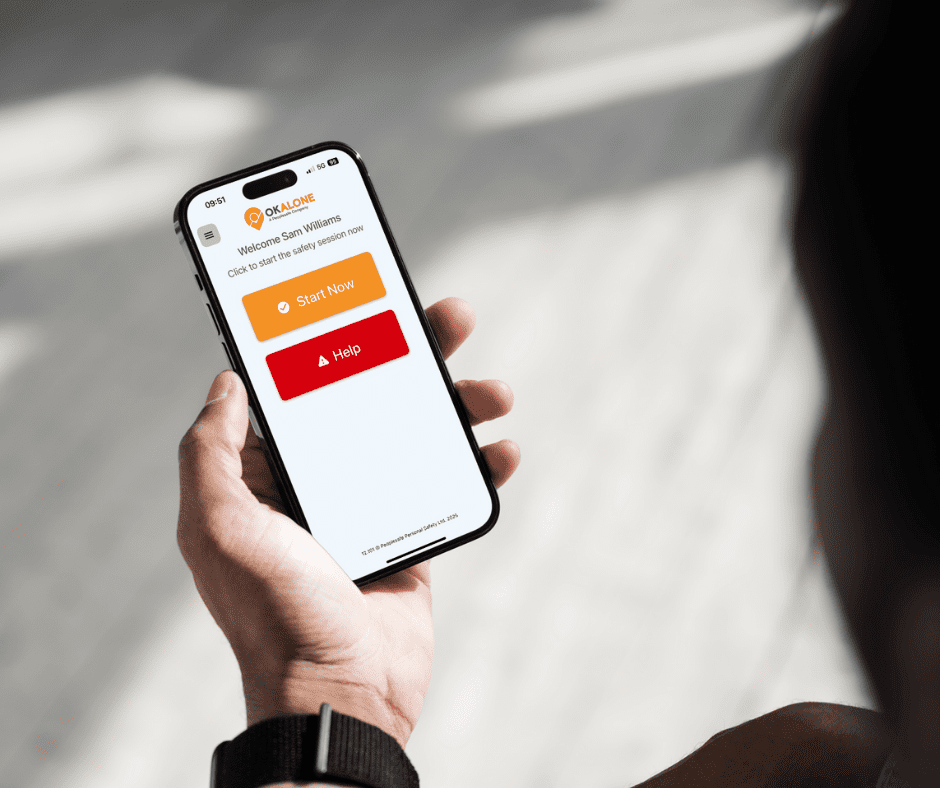
The OK Alone app avoids this by operating entirely through a smartphone platform. New users can be added immediately, without equipment or setup delays, which makes it much easier to scale as teams grow or change.

Balancing Oversight with Privacy
Monitoring always needs to be proportionate.
Continuous location monitoring without a clear reason can create concerns for workers and may not be necessary in many roles. In most cases, the goal is not to monitor every movement, but to make sure someone will notice if a worker needs help.
A structured approach helps achieve this balance. Workers confirm their safety at agreed intervals, and location data supports the response if something goes wrong. This reduces the need for constant observation while still maintaining effective protection.
For organizations, this approach is easier to justify from a compliance perspective. For workers, it is clearer and more transparent, which helps build trust in the system.

Cost Efficiency and Operational Impact
When you are procuring resources for an entire company cost and practicality tend to go hand in hand. However, using traditional hardware-based systems increase costs and can often require introducing additional steps into everyone’s daily routines. Devices need to be issued, maintained, tracked and replaced. Over time, this creates both cost and administrative overhead where using an App-based platform can simplify this. OK Alone uses existing smartphones, so there is no separate equipment to manage. This reduces upfront spend and removes the ongoing burden of device management.
For organizations scaling across multiple teams or locations, this makes a noticeable difference.

Conclusion
The best employee GPS monitoring apps in 2026 do more than show where people are. They make sure that if something goes wrong, it is noticed and acted on.
OK Alone combines location monitoring, structured check-ins and automated escalation in one system. This allows organizations to protect lone workers effectively, without adding unnecessary complexity.
Frequently Asked Questions
Yes. OK Alone uses smartphone-based location monitoring alongside structured safety check-ins and escalation.
No. Controls must be proportionate to the risks identified in a risk assessment.
Traditional apps focus on location visibility. OK Alone adds structured check-ins and automated escalation.
No. Location data should be combined with structured detection and response.
Yes. Data is managed within secure, permission-controlled environments.
No. It operates entirely through smartphones.
Yes. Digital onboarding allows rapid expansion without device management.
When combined with structured monitoring and escalation, it strengthens duty of care documentation.
Only where justified by risk. Structured check-ins can reduce the need for constant monitoring.
Yes. It scales from small teams to large distributed workforces.




Stacey Manclark
As an expert in lone worker content management, I possess an extensive knowledge base and experience in the area of lone working and safety monitoring. My expertise in this field encompasses a wide range of areas, including risk assessment, training, communication, and technology. I have a deep understanding of the unique risks associated with lone workers and have researched and written many projects and articles to educate people in how to mitigate these risks.
Throughout my time with OK Alone, I have kept up to date with technological developments, legislative changes and regulations that have been introduced to help organizations ensure the safety of their lone workers.
Book a Demo Today
Alternatively, get a free trial of the app
Want to try OK Alone? Click the button below and enter your details. It's free and no credit card is required.
