Automatic Heat Alerts Based on State Safety Thresholds
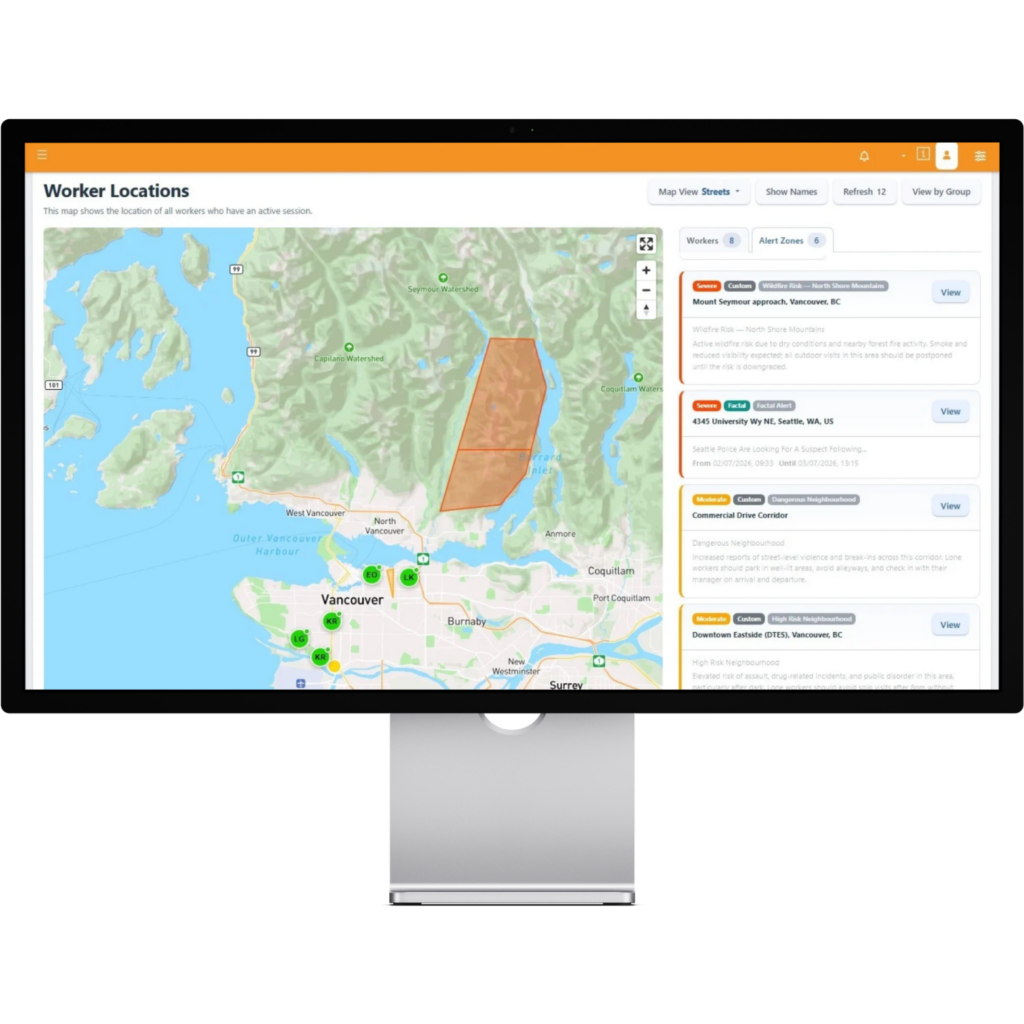
OSHA Heat Zones automatically checks local forecasts, matches active heat zones with worker locations, and sends clear notifications through the OK Alone app. Supervisors can also view active zones and affected workers through the existing OK Alone dashboard.
The profiles for California, Oregon, Washington and Maryland reflect selected temperature or heat-index trigger points used in those states’ workplace heat rules. Specific duties, coverage and exemptions vary by state.
Support Your Heat Illness Prevention Plan
Several US states have enforceable workplace heat standards that require employers to introduce protective measures when defined temperature or heat-index levels are reached.
OSHA Heat Zones helps organizations identify when configured state thresholds are forecast and automatically notify lone workers who may be affected. Instead of relying on supervisors to check multiple weather sources manually, the system provides a consistent, location-aware layer within the OK Alone platform.
Each notification is recorded, giving safety teams visibility into what was sent and when. This creates a recorded, system-driven layer within an organization’s wider heat illness prevention plan.
Learn more about employer responsibilities in our guide to US safety legislation.

How OSHA Heat Zones Works
OK Alone checks county-level forecasts every hour and compares forecasted conditions with the configured heat profile for the worker’s location.
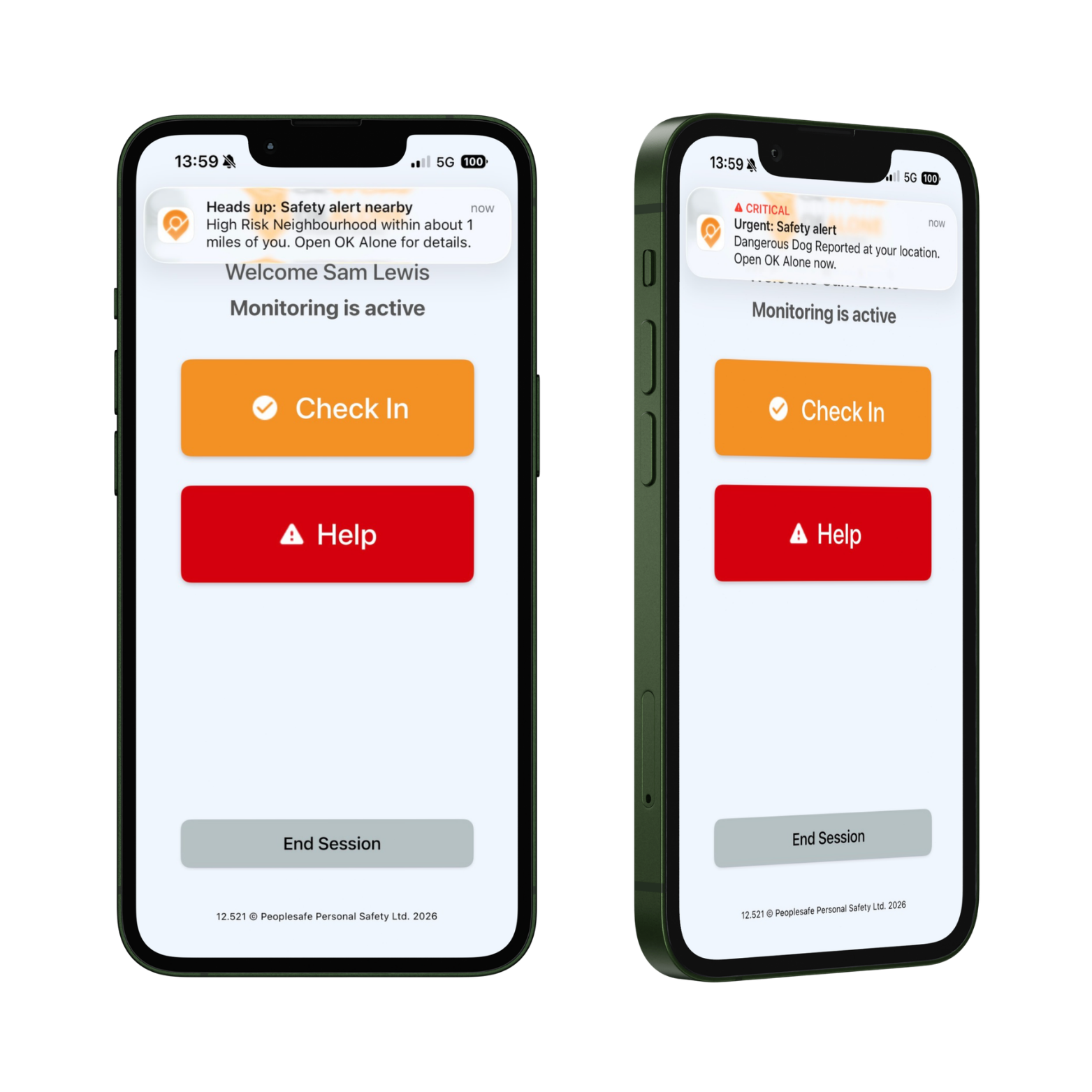
When a worker is inside an active heat zone, the OK Alone app sends a push notification identifying the applicable alert tier:
- Heat Proximity: The first configured heat threshold has been reached.
- Heat Limit: Higher-heat conditions have been identified.
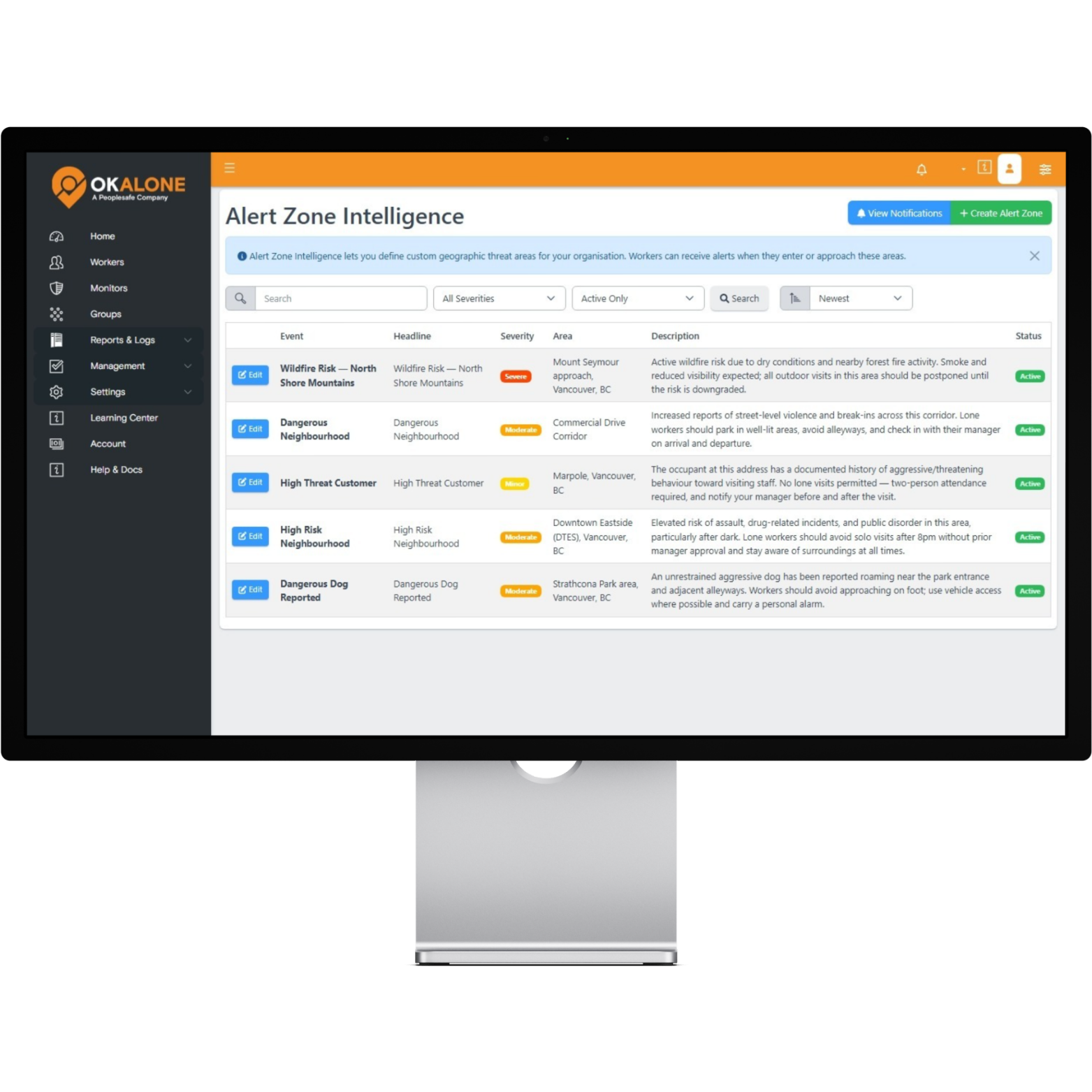
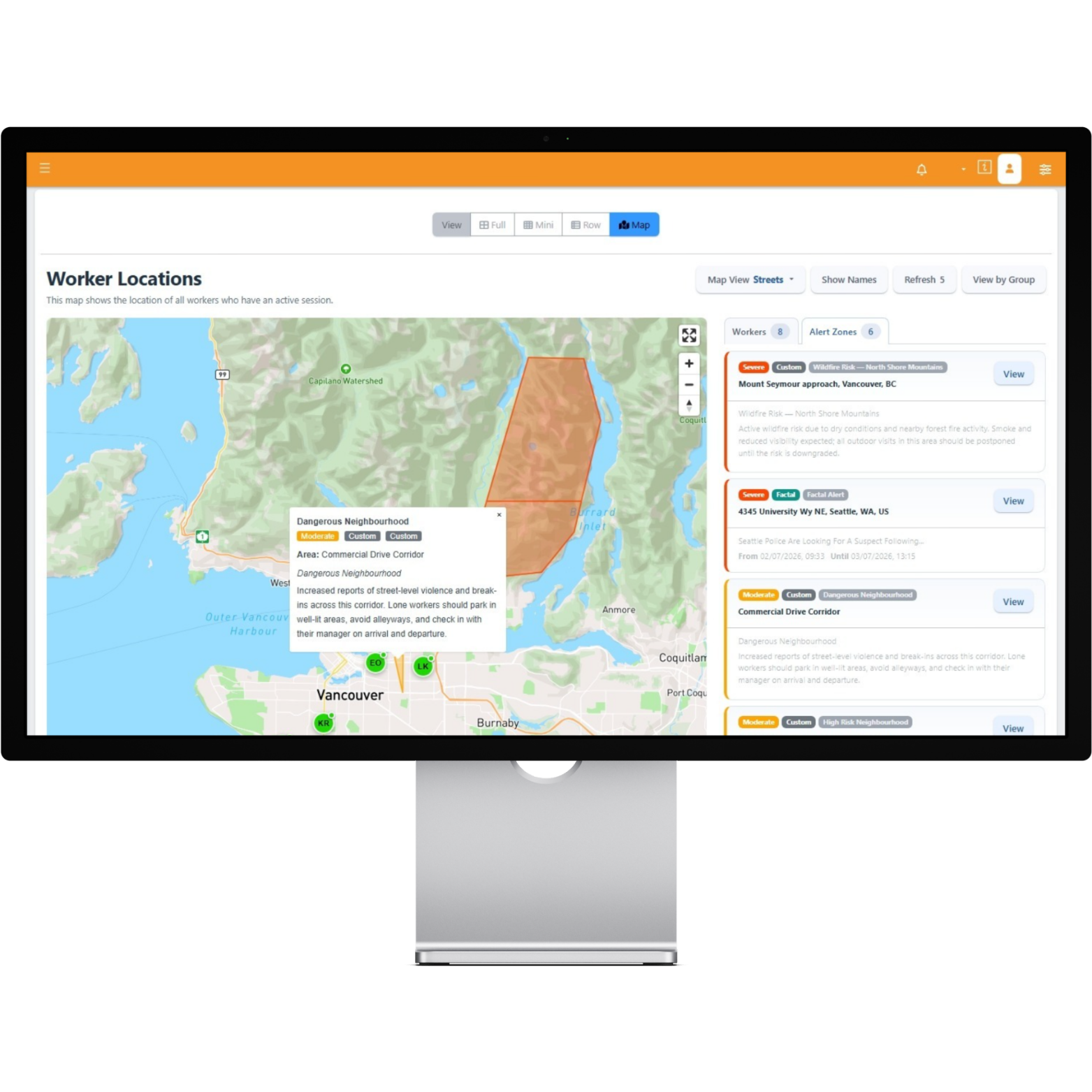
Active heat zones also appear on the existing Alert Zone Intelligence map, helping supervisors identify which workers may be affected without opening another system or learning a new workflow.
Every notification is logged, giving safety teams a record of what was sent and when. The notification provides awareness only. The employer’s heat illness prevention plan determines what workers and supervisors should do next.
State Heat Profiles Available at Launch
OSHA Heat Zones launches with configured alert profiles for six US states. These profiles help identify when forecasted conditions reach configured temperature or heat-index levels associated with state heat-protection requirements.
California
Heat Proximity: 80°F
Heat Limit: 95°F
Profile basis: Outdoor temperature thresholds for covered sectors.
Oregon
Heat Proximity: 80°F
Heat Limit: 90°F
Profile basis: Heat index, which accounts for temperature and humidity.
Washington
Heat Proximity: 80°F
Heat Limit: 90°F
Profile basis: Outdoor dry-bulb temperature.
Maryland
Heat Proximity: 80°F
Heat Limit: 90°F
Profile basis: Heat index, which accounts for temperature and humidity.
Nevada
Heat Proximity: Not applicable
Heat Limit: 90°F
Profile basis: A single-tier OK Alone high-heat alert profile.
Colorado
Heat Proximity: 80°F
Heat Limit: 95°F
Profile basis: Colorado’s agricultural heat-rule profile. For the first release, OK Alone applies this profile statewide for worker awareness.
Workers in the other 44 US states continue to receive OK Alone’s existing National Weather Service extreme-heat alerts.
Canada: OSHA Heat Zones is a US feature at launch. Workers in Canada will continue to receive weather alerts through OK Alone’s standard weather feed.
Benefits of OSHA Heat Zones


Heat Awareness Without Another Workflow
OSHA Heat Zones works within the Alert Zone Intelligence tools your team already uses. There is no separate dashboard or additional monitor workflow to manage.
Workers receive a clear app notification when they are inside an active heat zone, while supervisors can view the zone alongside worker locations on the existing OK Alone dashboard.
The feature can support outdoor and field-based teams working in:
- Construction and skilled trades
- Agriculture and farming
- Utility and line work
- Oil and gas field operations
- Landscaping and grounds maintenance
- Municipal and public works
- Field service and maintenance
- Inspection roles
Protect Outdoor Lone Workers During High Heat
OSHA Heat Zones works within the OK Alone platform your team already uses, providing automatic forecast checks, location-aware alerts and clear dashboard visibility.
See how OK Alone can support your heat illness prevention procedures and wider lone worker safety program.
Compliance Disclaimer
OSHA Heat Zones is an awareness and notification feature. It does not replace an employer’s legal obligations, workplace risk assessment, heat illness prevention plan, training, supervision, required water, shade, rest periods, emergency procedures or professional legal advice.
Applicable requirements vary by jurisdiction, industry, working environment and individual circumstances. Employers remain responsible for determining which laws and standards apply to their workforce and for implementing appropriate heat-safety controls.
The first release does not distinguish between indoor and outdoor workers inside a mapped zone. It also does not adjust alerts based on personal protective equipment, workload, sector, acclimatization or individual health factors.
Follow OSHA’s heat rulemaking for updates to federal heat requirements.
